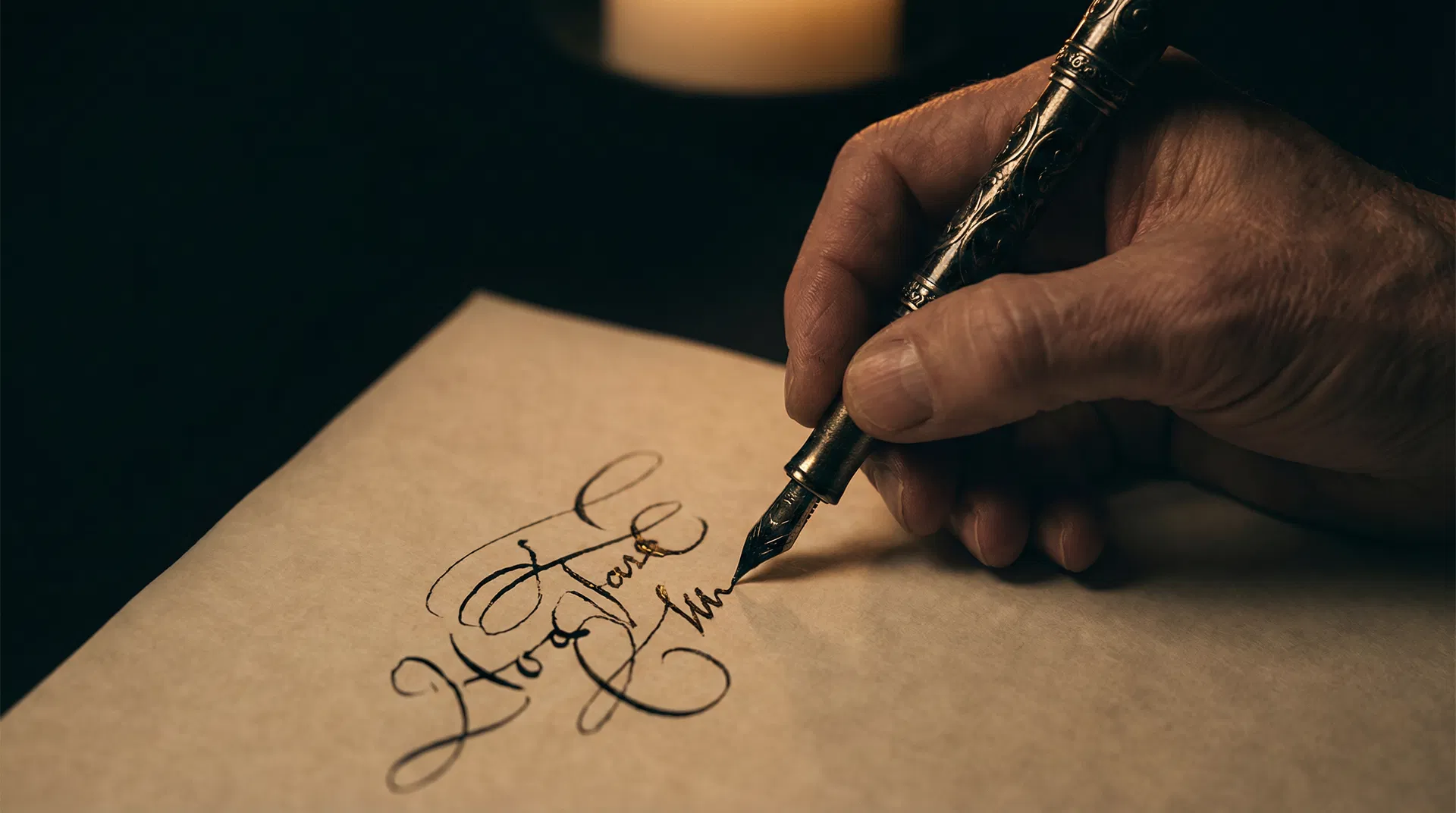
What makes a brand seem like luxury.
It is not the price. It is not the golden logo. It is something harder to copy.

uxury is not a price. It is a relationship with time. Luxury brands are not in a hurry; not in their communication, not in their design, not in their sales process. That calm is the hardest thing to imitate, because calm cannot be faked for long.
There are two very common confusions about luxury that are worth clearing up. The first is that luxury is synonymous with high price. There are expensive products that are not luxury, and there are luxury brands that have accessible products. Price is a consequence of luxury, not its definition. The second confusion is that luxury is communicated through certain visual elements: gold, black, serif typography, heavy packaging. Those elements can be signals of luxury, but they can also be signals of a brand trying to seem like luxury without being it. And the difference shows.
What makes a brand luxury is not any of those elements separately; it is the sum of all of them, applied with a consistency and a conviction that can only be achieved when there is something true behind it. When the story is real, when the process is authentic, when quality is not a marketing promise but a daily practice.
We have worked with brands that wanted to position themselves in the luxury segment and that had all the right visual elements but failed in the experience. The packaging was impeccable but the customer service was mediocre. The website was beautiful but the response time was three days. The product was excellent but the communication was generic. Luxury is not a visual style; it is an attitude that manifests itself at every touchpoint.
The economy of attention
A luxury brand does not shout. It does not need to. It knows that its client has time to search for it, to find it, to choose it. That is why its communication is dense, slow, deliberate. Every word is chosen. Every image, composed. Every silence, calculated.
In a world where most brands compete for attention with volume, urgency, and discounts, the luxury brand does exactly the opposite. It speaks little and speaks well. It does not interrupt; it waits to be sought. It does not offer discounts; it maintains the price as a signal of value. It is not in a hurry; it has patience.
That patience is expensive. It requires a very solid conviction in the value of what is offered, because in the short term it always seems more efficient to shout louder. But in the long term, the brands that have built their presence with calm and consistency are the ones with the most solid recognition and the deepest loyalty.
The absence of urgency is, in itself, a signal of luxury. When a brand does not need to convince you to buy now, it is saying that it trusts that, when you are ready, you will choose it. That trust is the foundation of the luxury relationship.
Consistency as signal
What distinguishes luxury brands is not the quality of each individual piece; it is the consistency between all of them. The packaging speaks the same way as the website. The website speaks the same way as the store. The store speaks the same way as the product. The product speaks the same way as the after-sales service.
That consistency is expensive to maintain and difficult to copy. It requires that all the people who work in the brand, from the designer to the delivery person, understand what the brand is and how it expresses itself. It requires systems, guidelines, training, constant review. It requires saying no to many things that seem like opportunities but would erode the consistency.
We have seen luxury brands that do everything right visually but fail in the human treatment. The salesperson who does not know the product. The confirmation email that seems automatically generated. The shopping bag that is not up to the price. Each of those failures is a crack in the consistency, and the cracks are noticeable even if the client cannot name them.
Consistency is not an aesthetic detail; it is the brand promise fulfilled in every interaction. And when it is fulfilled consistently, it generates something that no marketing campaign can generate: deep trust, the kind of trust that turns a client into an advocate.
Origin as value
Luxury brands know where they come from. They have a history, a place, a process. And they tell it; not as marketing, but as part of what they are. Origin is not a sales argument; it is the brand's reason for being.
Origin can be geographical: a territory with unique characteristics that manifest in the product. The champagne of Champagne, the leather of Córdoba, the olive oil of the Priego de Córdoba Denomination of Origin. Those origins are inimitable because they depend on conditions that cannot be reproduced elsewhere.
Origin can be familial: a story of generations that have perfected a craft, that have transmitted a know-how, that have maintained a conviction over time. That continuity is a value in itself, because it says that the brand is not a trend; it is a practice.
Origin can be philosophical: a way of understanding work, a conviction about how things should be done, a refusal to take shortcuts. When that philosophical origin is true, when it is not a story invented for marketing but a daily practice, it shows in the product, in the service, in every touchpoint.
When the origin is true, there is no need to invent anything. You only need to find a way to tell it with the same honesty with which it is lived.