Naming: the process nobody sees.
How to find a brand name when all the names seem to be taken.
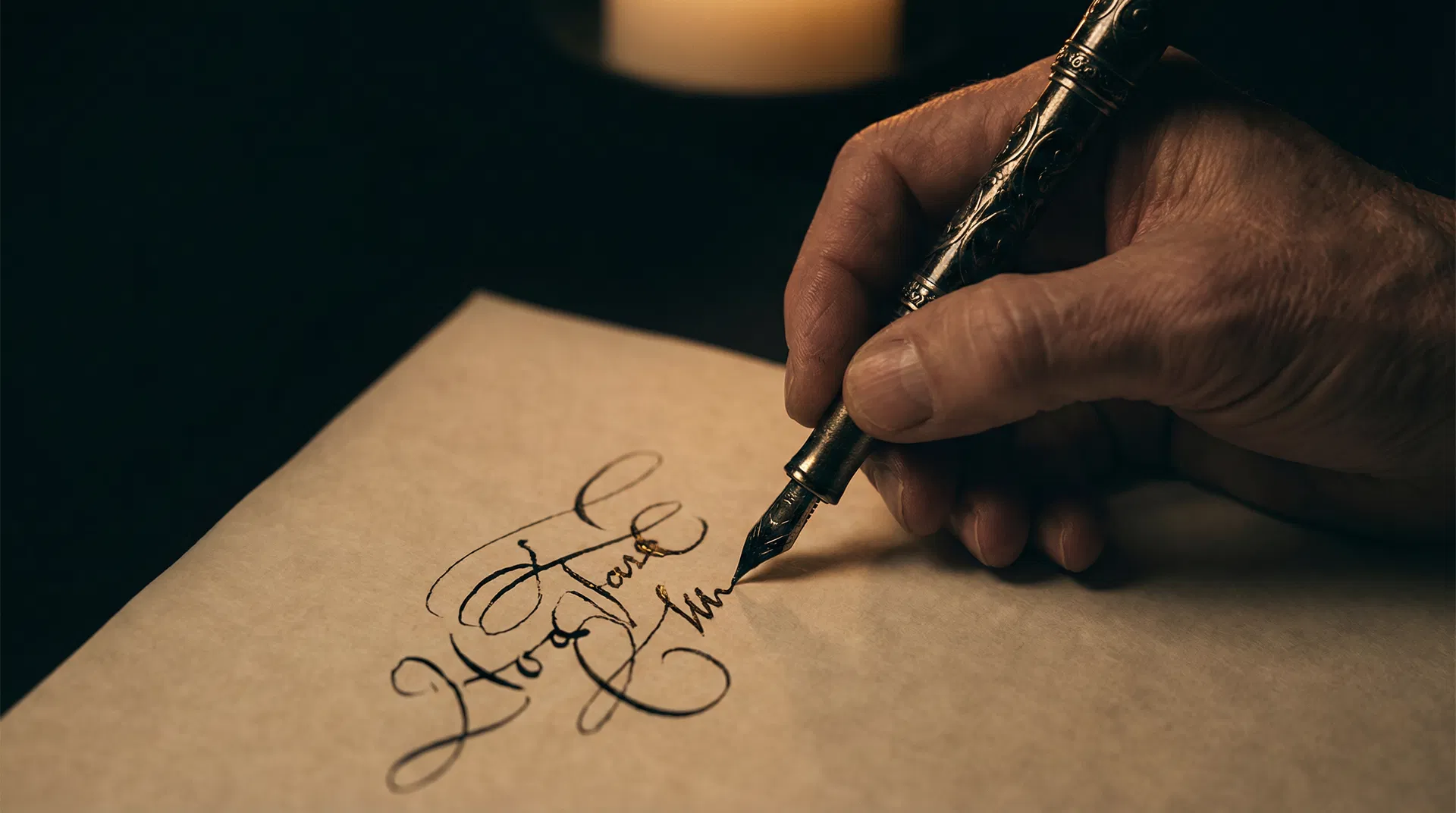
aming is the service that takes the most time and is the least visible. The client receives a word. They do not see the weeks of work, the hundreds of discarded options, the availability searches in trademark databases, the pronunciation tests in five languages, the checks that the name does not mean anything offensive in any relevant market.
One word. That is what the client sees. And that word has to be pronounceable, registrable, available as a domain, neutral in all relevant languages, and true: it has to reflect something real about the brand, not just sound good.
Meeting all those criteria simultaneously is extraordinarily difficult. That is why the naming process generates hundreds of options to arrive at one. Not because the creatives are inefficient, but because the space of names that meet all the criteria is very small, and finding it requires systematically exploring an enormous territory.
There is a paradox in naming that is worth naming: the best names seem obvious once you see them. They seem inevitable. It seems like it could not be any other way. That feeling of inevitability is the signal that the name is right. And achieving it requires work that, precisely because of its apparently simple result, nobody sees.
The territory before the name
A name is not invented; it is discovered. Before generating options, we need to understand the territory of the brand: what it is, who it is for, what it wants to say, what it never wants to say. That territory is the filter that turns a thousand options into ten candidates.
Without territory, naming is a word game. With territory, it is a search with direction. The difference between the two is the difference between a name that sounds good and a name that is true.
The territory is built with the same questions we use in any identity process: what does this brand do that no other does in exactly the same way? What story does it have that it has not yet told? Who is it speaking to and why should they care? The answers to those questions are the map that guides the search for the name.
Our own name, Cerne, is the result of that process. Cerne is the heartwood, the core of the wood, the densest and hardest part, the one that remains when everything else has disappeared. We found it in a conversation about permanence, about what makes a brand last. We did not invent it; we discovered it. And when we saw it, we knew it could not be any other way.
The criteria that matter
A good name has to meet five criteria simultaneously, and that simultaneity is what makes the process so demanding.
First, pronounceability. The name has to be pronounceable in the markets where the brand will operate. Not just in the founder's language; in all relevant languages. A name that sounds natural in Spanish may be unpronounceable in English, or may sound like something completely different in Japanese.
Second, registrability. The name has to be registrable as a trademark in the relevant product or service classes. This eliminates an enormous proportion of candidates, because the most obvious and most attractive names are usually already registered.
Third, domain availability. In today's world, a brand without its own domain has a credibility problem. The .com domain is the standard, although country domains or new TLDs can be valid alternatives in some cases.
Fourth, semantic neutrality. The name cannot mean anything offensive, ridiculous, or confusing in any relevant language. This criterion eliminates more candidates than one might expect.
Fifth, and most importantly, truth. The name has to reflect something real about the brand. Not just sound good; be true. Names that only sound good age. Names that are true grow with the brand.
The test of time
When we present names, we always ask the client to use them for a week before deciding. To say them out loud. To write them in an email. To pronounce them in a meeting. To imagine them on the facade of their office, in their email signature, on the business card they hand to an important client.
That week of real use reveals things that no analysis can reveal. It reveals whether the name is comfortable to pronounce or whether it requires effort. Whether it sounds natural in context or whether it draws attention in a distracting way. Whether the team adopts it easily or whether there is resistance.
The names that survive that week tend to be the right ones. Not the most beautiful, not the most creative; the most true. The ones the team starts using naturally, without thinking, as if they had always existed.
There is a quality in the best names that is difficult to describe but easy to recognize: the feeling that the name already existed before we found it, that it was waiting to be discovered. That quality of inevitability is the most reliable signal that the name is the right one.