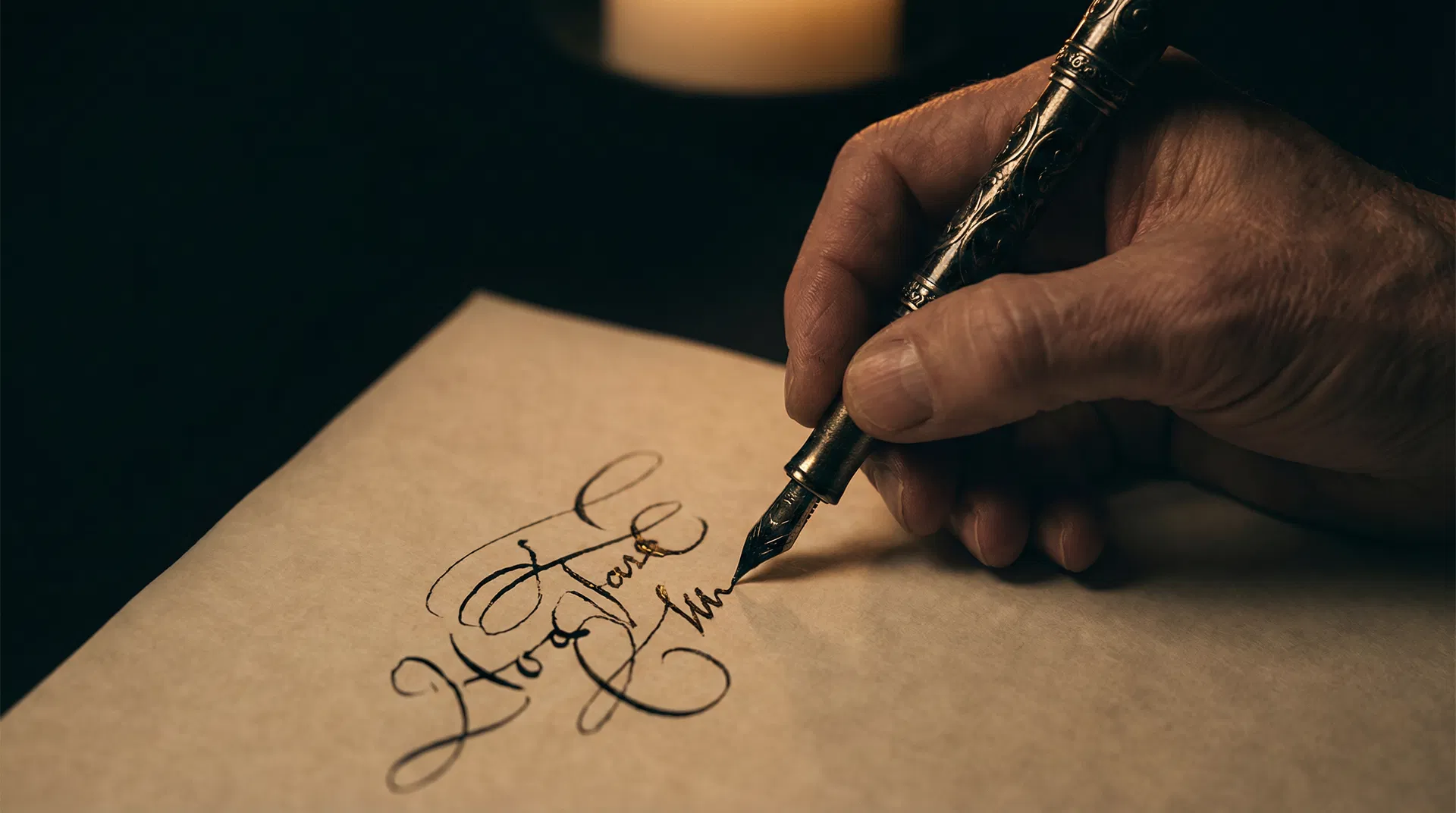
Brands that age well.
The difference between a brand that remains relevant at twenty years and one that seems dated at five.
here are brands that age like wine and brands that age like milk. The first gain depth, character, authority with the passage of time. The second become stale, dated, uncomfortable to look at. The difference between the two is not in the talent of the designer who created them; it is in whether the brand was built on something true or on something that seemed true at the time.
Design trends have a shelf life. What seems modern today seems dated in five years. The gradients, the shadows, the typefaces that define an era end up being the clearest signal that something was designed in that era. And brands built on trends age with them, because their identity is the trend, not the brand.
Brands that age well have something in common: they were designed to last, not to impress. Their designers chose clarity over originality, consistency over novelty, truth over spectacle. And those choices, which at the time of making them might have seemed conservative, are the ones that guarantee longevity.
Hermès has been Hermès for more than one hundred and eighty years. Not because it has not changed, but because what has changed are the details and what has remained is the essence. Artisanal quality, attention to material, the conviction that what is well made does not need to be explained. That essence predates the design and will survive any redesign.
Time is the most honest design criterion that exists. When we design a brand, we always ask ourselves how it will look in twenty years. Not to make something retro or timeless in the aesthetic sense, but to ensure that what we are building has roots deep enough to survive changes in taste.
What endures and what does not
Design trends are seductive because they offer immediate relevance. Adopting the trend of the moment is the fastest way to seem contemporary, to communicate that the brand is up to date, to connect with the visual sensibility of the present. The problem is that this relevance has an expiration date, and when it expires, the brand not only seems dated; it seems like it tried to be something it was not.
There is a difference between evolving and following trends. Brands that evolve well do so from the inside out: their core identity remains, and what changes are the expressions of that identity in different contexts and moments. Brands that follow trends do so from the outside in: they adopt the aesthetic of the moment and hope that is enough to seem relevant.
The first strategy builds brand equity. Each year that passes, the brand is more recognizable, more trustworthy, more valuable. The second strategy consumes brand equity. Each redesign that follows a trend erases part of what was built before and forces a restart.
We have worked with brands that had gone through three redesigns in ten years, each following the trend of the moment, and that at the end of the process had less identity than at the beginning. Not because the designs were bad; some were excellent. But because each redesign interrupted the accumulation of recognition that is the most valuable asset of a brand.
Essence as anchor
Brands that age well have an essence that acts as an anchor. No matter how much the world around them changes; there is something at the core of the brand that remains constant and that guides all decisions. That something is not the logo, nor the typography, nor the colors. It is the conviction about what the brand is and why it exists.
Dieter Rams spent decades designing products for Braun with a philosophy that can be summarized in ten principles, the best known of which is that good design is as little design as possible. That conviction is not a trend; it is a stance on the relationship between objects and people. And that stance is what makes Rams' products still relevant decades after they were designed.
The century-old wineries that have survived wars, economic crises, and radical changes in consumer taste have something similar: a conviction about what makes a wine good that does not change with fashions. They may change the packaging, they may change the communication, they may even change the varietals they grow. But the conviction about quality remains.
When we work on a brand identity, we always look for that essence before we start designing. Not because it is a requirement of the process; but because without it, what we design will have no anchor. It may be beautiful, it may be relevant in the moment, but it will not have the depth necessary to survive time.
Evolving without betraying yourself
Brands that age well are not brands that do not change. They are brands that know what to change and what not to. They know that form can evolve while essence remains. That colors can be updated while character is maintained. That language can be modernized while the voice remains recognizable.
This distinction between form and essence is the key to well-executed brand evolution. When Coco Chanel said that fashion fades, style remains, she was describing exactly this distinction. Fashion is form, style is essence. And brands that confuse the two end up losing both.
The evolution of a brand should be gradual, cumulative, almost imperceptible on a day-to-day basis. Not great ruptures that force the client to relearn who the brand is; small adjustments that keep the brand current without interrupting the accumulation of recognition. Every change should be justifiable from the essence, not from the trend.
We have seen brands that have evolved over decades with admirable consistency, and when looking at their visual history you can trace a continuous line from the first logo to the current one. Not because the designs are the same; but because each evolution respected what came before and added something without erasing anything. That continuity is the hardest asset to build and the easiest to destroy with a poorly thought-out redesign.